

Tiny moons, p.1
Tiny Moons, page 1


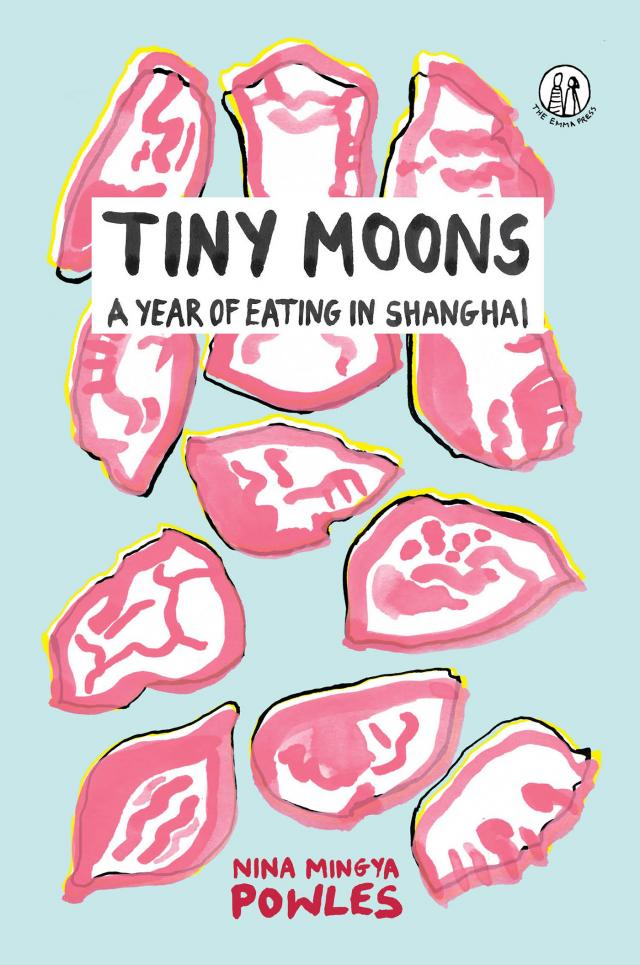
TINY MOONS
OTHER TITLES FROM THE EMMA PRESS
POETRY PAMPHLETS
Elastic Glue, by Kathy Pimlott
Dear Friend(s), by Jeffery Sugarman
Poacher, by Lenni Sanders
priced out, by Conor Cleary
The Stack of Owls is Getting Higher, by Dawn Watson
A warm and snouting thing, by Ramona Herdman
SHORT STORIES
First fox, by Leanne Radojkovich
Postcard Stories, by Jan Carson
The Secret Box, by Daina Tabūna
Once Upon A Time In Birmingham, by Louise Palfreyman
POETRY ANTHOLOGIES
In Transit: Poems of Travel
Second Place Rosette: Poems about Britain
Everything That Can Happen: Poems about the Future
The Emma Press Anthology of Contemoprary Gothic Verse
BOOKS FOR CHILDREN
The Girl Who Learned All the Languages Of The World, by Ieva Flamingo
Wain, by Rachel Plummer
The Adventures of Na Willa, by Reda Gaudiamo
When It Rains, by Rassi Narika
Poems the wind blew in, by Karmelo C. Iribarren
POETRY AND ART SQUARES
Now You Can Look, by Julia Bird, illustrated by Anna Vaivare
The Goldfish, by Ikhda Ayuning Maharsi Degoul, illustrated by Emma Dai’an Wright
THE EMMA PRESS
First published in the UK in 2020 by the Emma Press Ltd
Text © Nina Mingya Powles 2020
Illustrations © Emma Dai’an Wright 2020
All rights reserved.
The right of Nina Mingya Powles to be identified as the author of this work has been asserted in accordance with the Copyright, Designs and Patents Act 1988.
Edited by Emma Dai’an Wright.
ISBN 978-1-912915-34-7
EPUB ISBN 978-1-912915-35-4
A CIP catalogue record of this book is available from the British Library.
Printed and bound in the UK by Imprint Digital, Exeter.
The Emma Press
theemmapress.com
hello@theemmapress.com
Birmingham, UK
CONTENTS
Hungry Girls
WINTER
锅贴 / Pan-fried Dumplings
葱油拌面 / Spring Onion Oil Noodles
SPRING
菠萝包 / Pineapple Buns
pisang goreng / Banana Fritters
SUMMER
芝麻饼 / Sesame Pancakes
粽子 / Sticky Rice Dumplings
馄饨面 / Wonton Noodle Soup
AUTUMN
上海早饭 / Breakfast in Shanghai
茄子 / Chinese Aubergines
WINTER AGAIN
饺子 / Boiled Dumplings
Acknowledgements
About the author
About the illustrator
Glossary
About The Emma Press
Hungry Girls
A pair of pink plastic chopsticks. A bowl full of instant noodles. The smell of chicken stock and jasmine tea. Steam starts to tickle my nose. Popo, my grandmother, watches me from her lacquered chair.
This is one of my very early memories, where the shapes are blurred and colours flare out in waves. Pink and yellow plastic, deep blue Tibetan carpet. I don’t know if all the parts are real, but I do know what happened next. When no one was looking, I flipped the bowl. The rim hit the table with a clatter, flinging out noodles and sending my chopsticks onto the floor. My mother shouted Aiyah! as I knew she would. But in the memory-dream, Popo doesn’t move. She sits still, watching me.
I only wanted to make a mess, but I think this might have been my first act of rebellion. No more chopsticks. No more noodles, at least not today.
This was short-lived, of course. I ate noodles willingly nearly every day growing up, so much so that they were known as Nina Noodles at my aunt and uncle’s house.
But there came a time, when I was about five, when I started to hate my weekend Chinese classes. I had bad dreams about the red and gold banners strung across the doorways and the high-pitched songs they made us sing. None of the other kids looked like me. None of their dads looked like mine. The languages and dialects they spoke with their parents sounded familiar to me, and I recognised a few words, but I wasn’t able to join in. I stopped attending the classes. Eventually my mother stopped using Chinese at home, or maybe I just stopped listening. Words vanished, along with the sounds.
ming 明 / a sun 日 next to a moon 月
ya 雅 / a tooth 牙 next to a bird 隹
Big hips, brown eyes, and brown hair that turns lighter during a Aotearoa New Zealand summer. The way I look means that people can’t usually tell that I’m half Malaysian-Chinese. The way I look has given me enormous privilege my whole life, in a series of predominantly pakeha1 spaces: a white school, white university (in the English and Creative Writing departments at least), white suburb, white poetry readings. It means I can lie when a guy approaches me in a bar to say he really likes mixed girls and asks, ‘Can I guess your ethnicity?’ It makes it easy for some white people to see me as the same as them.
My grandfather, Gung Gung, picked my Chinese name when I was born. It’s also my middle name: 明雅, Mingya, meaning something like ‘bright elegance’. I only really learned to say it correctly when I was seventeen (rising tone, falling-rising tone) and only learned how to write the characters when I was twenty, after years of ducking out of the classroom game of what’s-your-middle-name, muttering ‘Never mind, it’s Chinese’, as if that were the same as not having one at all.
I starved myself of language, but I couldn’t starve myself of other things. Wonton noodle soup, Cantonese roast duck, my mother’s crispy egg noodles and her special congee. All the thick, sweet smells of yum cha restaurants my parents took me to, ordering all the same dishes every time, ever since I was born. I remember peeling pieces of rice paper from steaming charsiu bao and scrunching them into paper flowers. I remember drawing one of the few Chinese characters I knew on the steamed-up glass with my finger: 米, mi, the character for rice, like an open flower or a six-point star.
We moved to Shanghai when I was twelve, and I encountered a whole new landscape of sound: voices chattering in rising-falling waves, chaotic but familiar. I built myself a new home with new colours, new friends, and new foods: mooncakes, sesame pancakes, fried aubergine, black tea, and dumplings.
To remember, to re-member. Remembering as the opposite of dismembering. To put something back together again. A sun next to a moon, a tooth next to a bird.
I taught myself to cook around the same time I decided to take Chinese as one of my subject majors at university back in Wellington, along with English Literature. I was hungry to create, to make things with my hands, to relearn and recover what I’d lost.
Xu Ayi, our family’s housekeeper in Shanghai, had written down her recipe for jiaozi, dumplings, and given it to my mother. My mother translated it into English and copied it carefully into her cut-and-paste recipe book made of scraps of newspaper and magazines. I used this recipe in my Kelburn student flat, trying out different fillings depending on which vegetables were cheapest at the market: spinach instead of Chinese cabbage, spring onions instead of chives. I researched all the different ways of making cong youbing, spring onion pancakes, and combined them into my own method, kneading and folding the dough early in the morning before class so it would be ready to fry that night.
When she was younger, Popo was a brilliant cook. The kitchen was hers and hers alone. She always had something cooking, some soup or congee made from the bones of last night’s meat. I can’t speak Hakka, the Chinese dialect my mother’s family speak at home, so I only had simple conversations with her, in a mix of Mandarin and English, before her health deteriorated and speech wasn’t really possible anymore. I wish I had thought to ask: what’s your favourite dish to cook? Which flavours remind you of when you were little? What did your mother teach you?
On a visit to Malaysia a few years ago, the last time Popo was healthy and lucid enough to talk with us, my mother acting as translator as usual, I asked for the recipe of her chicken and aubergine curry. It was years since she last cooked but still she knew it by heart. After dinner, the three of us sat round the table: Popo explaining the steps in Hakka, Mum translating into English, me writing everything down. In the background I could hear Gung Gung watching a Cantonese soap opera upstairs and the soft clicking of moths and mosquitoes flying at the netted windows.
When I last saw her, six months before she passed away, Popo could never remember whether she’d turned the light off in the upstairs rooms, going back to check again and again. She couldn’t remember if she’d offered you a napkin, so she’d offer you another and another. But some things are harder to forget.
女 (woman, feminine): I see a curved standstill /
a breath being held in /
It is tiring to be a woman who loves to eat in a society where hunger is something not to be satisfied but controlled. Where a long history of female hunger is associated with shame and madness. The body must be punished for every misstep; for every “indulgence” the balance of control must be restored. To enjoy food as a young woman, to opt out every day from the guilt expected of me, is a radical act, of love. My body often feels like it’s neither here nor there. Too much like this, not enough like that. But however it looks, my body allows me to feel hunger.
We must have been fourteen or fifteen, eating burgers at ou r favourite expat American diner in Shanghai, licking salt and ketchup off our fingers. We were best friends: two half-Chinese girls, one with hair darker than the other, one a little taller, both with our nails painted black. An older white man came up close to our table. ‘You two must be hungry girls,’ he said, raising an eyebrow and walking on. We stared after him, mouthed What the fuck. Then we looked at each other and started to laugh because we didn’t know what he meant exactly, only that it was true.
I’ve been learning Mandarin for over three years now but there are still days when language fails me, when food feels like the only thing I have to tie me to this other home my family brought to me from far away.
There are things that pass from one hand to another, from mothers to daughters, from sister to sister, between cousins, between friends. A hot curry puff fresh from the oven, a secret batter recipe, a special technique for slicing mango.
One day I tried making Popo’s curry in my flat in Wellington. I read all the ingredient labels of all the curry powders in the supermarket to find the closest match: coriander seeds, cumin, fennel, chilli, turmeric, cinnamon, cloves, pepper, cardamom. The richly-scented list repeated like an incantation in my head. I bought fresh roti canai from Kelburn Parade and carried it home through a southerly storm. The curry turned out badly: watery, flavourless, the aubergine overcooked. But for a while my little kitchen smelled like cumin and coconut and crushed ginger. Like running in from the tropical rain, like Popo ladling rice into our bowls, like the lit mosquito coil and the flame lighting up my mother’s hands as she carries it towards me. These things I don’t need language to understand.
1 New Zealanders of European descent
WINTER
season of baby mandarins, apples
Pan-fried Dumplings
锅贴
On a Saturday morning I wait in line at my local Yang’s Dumplings, just down the road from my university in Shanghai. The air smells of hot oil and toasted sesame seeds. I watch clouds of steam collect near the ceiling. As the lunch rush approaches, noise builds in the food court.
The regulars and the serving staff are used to me by now. Only a few older aunties stare at me, and when I smile back at them they look away, amused. A little boy waiting in line behind me bumps my hip and his father apologises in English, embarrassed. ‘Mei guanxi,’ I reply – no worries. He looks surprised for half a second, then turns back to his phone. ‘Wo e sile,’ the boy moans repeatedly. I’m so hungry I’m gonna die. Me too.
There are no chairs, only one long stainless steel bench where grandmas and grandkids sit elbow-to-elbow, shovelling soup and dumplings drenched in chilli oil into their mouths. I can’t read the whole menu but it doesn’t matter, because the way it works here is there are two windows where you queue for two kinds of dumplings: the famous shengjianbao (fried soup dumplings) and guotie (pan-fried dumplings). I hand the chef my order receipt and he piles four fat guotie into a plastic container. He points me to the vinegar-and-chopsticks station even though I swear he must recognise me – how could he not? I come in almost every day. But he offers no sign of recognition, and returns grumpily to doling out more dumplings.
I eat my guotie right there, standing beneath the fluorescent lights. First the crunch, then hot soup scalds my tongue – I wasn’t expecting so much soup – then gingery, garlicky pork in the middle. I’ve got soup in my hair and all over my chin and there’s an auntie staring at me who finds this very funny, but I don’t care. I take a bite and my worries melt away. I’m home and also far away from home, in one bite.
I arrived in Shanghai near the end of winter, in February, to take up the Chinese government scholarship that allowed me to study Mandarin full-time for one year, with a small room of my own on the university campus. The day I arrived I felt dazed, blinking through the thick winter smog. My first meal at the campus cafeteria consisted of cold pickled vegetables, wilting stir-fried cauliflower with slivers of beancurd skin and plain steamed rice. Chinese cauliflower is picked late in the season so the florets are smaller, with tougher stalks, chewy but not unpleasant. I hadn’t yet learned that Chinese students eat lunch as early as eleven o’clock; by early afternoon, the lunch hour is long finished and there’s hardly any food left. I was hungry enough for anything, but as I ate my way through this cold meal I felt homesick. I hadn’t expected to feel so lonely so soon. Back in my dorm room, I unpacked my warmest winter clothes. The room was about one metre wide and two metres long, with a bed, a desk and a small wardrobe, and a tiled floor and piece of foam for a mattress. No kitchen, and it was tiny, but it was mine.
In my first week as a liuxuesheng (foreign student), I tried all kinds of dumplings I had never seen before. Shanghai-style shaomai with sticky rice and shiitake mushrooms on top; the famous soup-filled xiaolongbao, to dip carefully in a mix of vinegar and soy sauce and top with thin strips of fresh ginger before taking a bite. But after six days of new dumpling adventures, I craved something more familiar.
Guotie (the name literally translates to ‘stuck to the pot’) are the pan-fried version of shuijiao, boiled dumplings. They are half steamed and half fried, to make their bottoms crisp and their skins tender. There is nothing like the sound of water hissing as it hits the wok and the lid being clamped down over it.
When I was a teenager in Shanghai, Xu Ayi made guotie in our kitchen almost every day. I came home from school to the sharp smell of vinegar and the sound of her smashing cloves of garlic on the kitchen counter. I watched her mix Shaoxing cooking wine with soy sauce and a cold beaten egg, then add minced pork, chives, garlic, ginger and white pepper to the blue-rimmed enamel bowl. She didn’t make her own dough for the skin, but bought bags of fresh wrappers from the market around the corner.
She showed us how to pleat and fold the dumplings, but my mother and I were never very good. My mother grew up eating mostly Cantonese, Hakka and Malay Chinese food and so didn’t learn how to fold these types of wheat dumplings, which originate from northern China. Xu Ayi took the round wrapper in her palm, dabbed a little water around the edge for glue, and spooned a bit of the pork into the middle. Her expert fingers sealed each one shut with four folds, spaced evenly along one side of the curve. On a plastic tray printed with a border of blue roses, she laid them out like rows of small crescent moons.
We took this recipe back home with us too, and tried to recreate it. Our efforts were good enough: we made them almost every week when I was sixteen or seventeen, filling and folding them on trays balanced in our laps as we watched our favourite cooking shows – Rick Stein or Anthony Bourdain – on TV. But the xianr, the filling, was never quite the same. The difference was subtle: not the ingredients or seasonings, but the texture, the ratio of soft-to-crunch, the weight and feel of holding one in the air between two chopsticks. Maybe it’s impossible to recreate the exact weight of a memory, but we keep trying.
The harsh cold has retreated a little in Shanghai. It feels like something has softened inside the air, a bit of blue returning to the sky, and it’s lighter in the evening. I’ve recovered from the flu enough to get up and put on my normal clothes. After days spent in bed, the moment I’m out and about I’m viciously hungry. I head down the road to my nearest dumpling joint, the name of which I can’t yet decipher. I try to sound out the familiar parts of each unfamiliar character. The staff wear orange t-shirts and the girl at the counter has stick-on jewels on her nails. At seven in the evening, long after most families have gone home, students seem to be sitting in groups at the tables but when I look closer I see they are actually eating alone, watching TV shows and music videos on their iPhones propped up against the chopstick dispensers. No one looks up when I sit down.
The guotie are cheap here, five yuan for a plate of four. In what I’m beginning to learn must be the typical Shanghai style, the dumpling skin is almost as thick as the dough used for shengjianbao, pan-fried buns, which makes for extra crunchy bottoms. They come sprinkled with black sesame seeds and chopped spring onions. These Shanghai guotie aren’t like Xu Ayi’s: they are big and hearty, filled with soup as well as meat.






